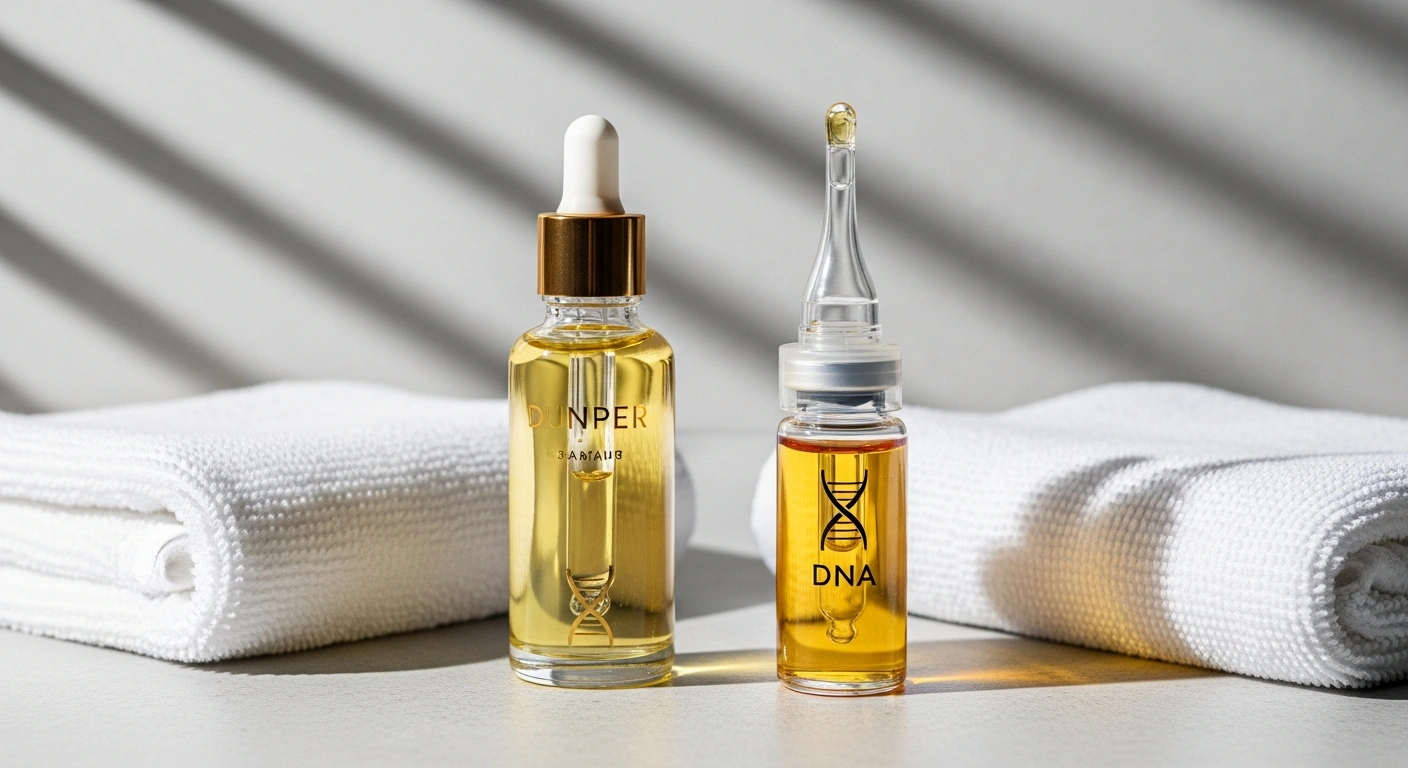
“Salmon DNA” sounds like something from a sci-fi movie, but PDRN is actually one of the most interesting regenerative ingredients to cross over from medicine to skincare. Let’s look at what the science actually says.
What Is PDRN?
PDRN stands for polydeoxyribonucleotide—a mouthful that essentially means fragments of DNA, specifically from salmon. These are not living cells or anything that will alter your genetics. They’re DNA building blocks that your cells can use for repair and regeneration.
PDRN has been used in medicine for decades, particularly for wound healing and tissue repair. Korean beauty brought it into skincare, and now it’s gaining attention worldwide.
How PDRN Works in Skin
Cellular Regeneration
PDRN provides nucleotides that cells need for DNA repair and replication. This can accelerate skin renewal and help damaged cells recover. It’s essentially giving your skin extra raw materials for repair.
Growth Factor Stimulation
PDRN activates the A2A adenosine receptor, which triggers the release of vascular endothelial growth factor (VEGF) and other growth factors. This improves blood flow and stimulates tissue regeneration.
Anti-Inflammatory Effects
Research shows PDRN reduces inflammatory markers. Less inflammation means less collagen breakdown and a healthier environment for skin repair.
Collagen Support
By promoting fibroblast activity and providing cellular building blocks, PDRN supports collagen production—a key factor in skin firmness and elasticity.
| Mechanism | What Happens | Skin Benefit |
|---|---|---|
| Nucleotide supply | Provides DNA building blocks | Accelerated cell repair |
| A2A receptor activation | Triggers VEGF release | Improved circulation; regeneration |
| Anti-inflammatory | Reduces inflammatory markers | Less collagen breakdown |
| Fibroblast stimulation | Increases collagen production | Firmer; more elastic skin |
What Research Supports PDRN?
Wound healing: Multiple studies show PDRN accelerates wound healing and tissue repair. It’s used in medical settings for burns, ulcers, and surgical recovery.
Injectable studies: PDRN injections show improvements in skin quality, hydration, and elasticity. This is common in Korean aesthetic clinics.
Topical research: Fewer studies exist for topical application, but available research suggests benefits for skin regeneration and anti-aging when formulated for penetration.
The medical use case is strong. Topical skincare application is newer, but the underlying mechanisms suggest real benefits.
PDRN + Microneedling
This is where topical PDRN gets interesting. Microneedling creates channels that allow PDRN to penetrate far deeper than surface application. You’re essentially getting closer to the benefits seen with injectable PDRN, but at home.
PDRN is also ideal post-microneedling because the controlled injury triggers the same regenerative pathways that PDRN supports. They work synergistically—microneedling creates the stimulus, PDRN provides the building materials.
Who Should Consider PDRN?
Good candidates:
Those focused on skin regeneration and repair. Post-procedure recovery (after microneedling, lasers, etc.). Mature skin needing cellular support. Anyone interested in K-beauty advances. Those who haven’t seen results from traditional ingredients.
May not need it:
Young skin without specific concerns. Those on a tight budget (PDRN products tend to be pricier). If you’re getting good results from current routine.
Choosing a PDRN Product
Look for:
PDRN or polydeoxyribonucleotide listed prominently in ingredients. Appropriate concentration (should be specified). Complementary ingredients like hyaluronic acid, peptides. Packaging that protects from light and air degradation.
Be cautious of:
Products that just say “salmon” without specifying PDRN. Very low price points (quality PDRN is expensive to produce). Vague claims without ingredient specificity.
How to Use PDRN Serum
Daily routine:
Cleanse → PDRN serum → Other serums (niacinamide, hyaluronic acid) → Moisturizer → SPF (morning)
With microneedling:
Apply PDRN serum before and after treatment for enhanced delivery and regenerative support.
Pairs well with:
Growth factor serums (complementary regeneration). Peptides (different pathways, synergistic effects). Hyaluronic acid (hydration support).
What to Expect
Short-term: Improved hydration, skin comfort. PDRN is generally well-tolerated.
Medium-term (4-8 weeks): Improved skin quality, texture refinement.
Long-term (3+ months): Enhanced regeneration, potential improvements in elasticity and firmness.
PDRN isn’t a dramatic overnight transformer—it supports skin health at the cellular level over time.
The Bottom Line
PDRN is a legitimate regenerative ingredient with solid medical research supporting its tissue repair capabilities. While topical skincare application is newer than injectable use, the science suggests real benefits—especially when combined with microneedling to enhance delivery.
Is it essential? No. Is it an interesting addition for those focused on skin regeneration? Absolutely.
Your skin knows how to repair itself. PDRN just gives it better tools.


