Forehead wrinkles are often the first lines people notice—and the first they want gone. They’re front and center, impossible to hide with makeup, and can make you look tired or worried even when you’re not.
Botox is the obvious solution, but it’s not the only one. Here’s how to genuinely reduce forehead lines without injections.
Why Forehead Wrinkles Form
Understanding this helps you target treatment effectively. Forehead lines develop from repeated muscle movement—raising your eyebrows in surprise, concentration, or expression. Each contraction creases the skin. Do it thousands of times over years, and those temporary creases become permanent lines.
Add declining collagen production with age, sun damage breaking down skin structure, and dehydration making lines more visible, and you get progressively deeper wrinkles.
Effective treatment needs to address muscle movement AND skin quality.
The Muscle Relaxation Approach
This is what Botox does—and what topical alternatives can do more gently.
Argireline Serums
Argireline (acetyl hexapeptide-8) is the most effective topical for relaxing facial muscles. It works through a similar mechanism to Botox, reducing the signal that tells muscles to contract.
Applied twice daily to your forehead, argireline can reduce wrinkle depth by up to 30% within a month. That’s visible, meaningful improvement.
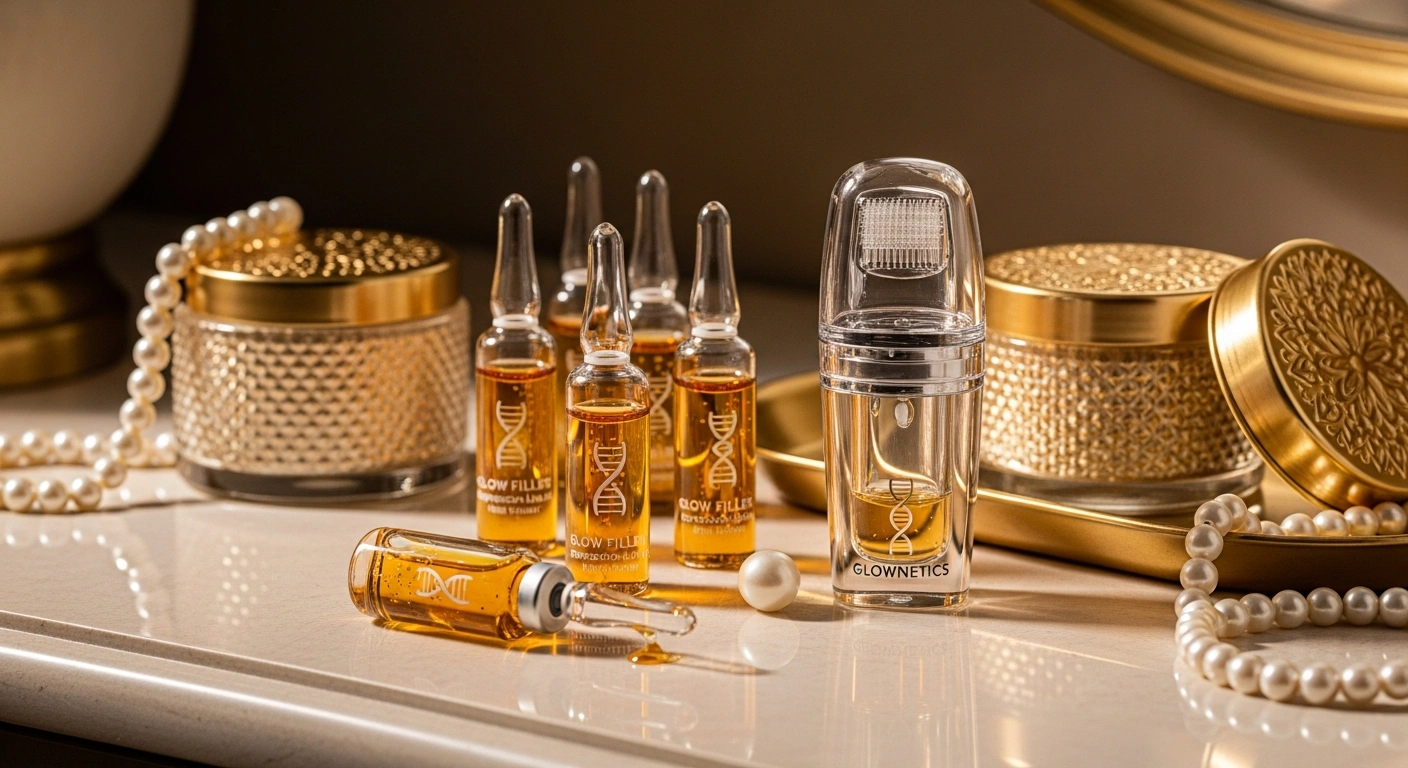
The Glow Filler kit is formulated specifically for this—concentrated argireline serum plus microneedling for enhanced delivery.
Supporting Peptides
Other muscle-relaxing peptides can enhance results when combined with argireline: SNAP-8 (an argireline derivative), Leuphasyl (works on a different pathway), and Syn-Ake (mimics snake venom effects).
Quality formulations often combine multiple peptides for synergistic effects.
The Collagen Rebuilding Approach
Relaxing muscles helps, but rebuilding skin structure creates lasting improvement.
Retinol
The gold standard for collagen stimulation. Retinol increases cell turnover and signals your skin to produce more collagen. Use it on nights when you’re not microneedling.
Start with lower concentrations (0.25-0.5%) and work up to avoid irritation. The Glow Retinol Serum pairs retinol with niacinamide to reduce irritation potential.
Microneedling
Microneedling triggers your skin’s wound-healing response, ramping up collagen production. When combined with muscle-relaxing serums, you’re addressing both causes of forehead wrinkles.
Weekly sessions with proper technique can significantly improve forehead skin quality over 2-3 months.
Growth Factor Serums
Stem cell serums and growth factors signal your skin to repair and regenerate. They work particularly well when delivered via microneedling.
| Approach | How It Works | Timeline for Results |
|---|---|---|
| Argireline serum | Relaxes muscle contraction | 2-4 weeks visible improvement |
| Retinol | Stimulates collagen production | 6-12 weeks for collagen benefits |
| Microneedling | Triggers healing response | 2-3 months for full effect |
| Combined approach | All mechanisms together | Fastest and most significant results |
The Combined Protocol (Best Results)
For maximum forehead wrinkle reduction without Botox:
Daily Morning: Cleanse → Argireline serum on forehead → Antioxidant serum → Moisturizer → SPF (critical—sun damage worsens wrinkles)
Daily Evening (non-microneedling nights): Cleanse → Argireline serum → Retinol → Moisturizer
Weekly (microneedling night): Cleanse → Argireline serum → Microneedle forehead → More argireline serum → Hydrating moisturizer (skip retinol)
This protocol attacks forehead wrinkles from every angle: muscle relaxation, collagen stimulation, enhanced product delivery.
Lifestyle Factors That Matter
Products work better when you’re not fighting against lifestyle factors:
Sun protection: UV damage is the #1 external aging factor. Daily SPF 30+ is non-negotiable if you’re serious about wrinkles.
Expression awareness: Notice when you’re constantly raising your eyebrows or furrowing. Some people do this unconsciously all day. Relaxing these habits reduces the repetitive creasing.
Sleep position: Side and stomach sleeping can compress and crease your forehead. Back sleeping is better for wrinkle prevention.
Hydration: Dehydrated skin shows every line more prominently. Drink water and use hydrating products.
What About Forehead Patches and Devices?
You’ve probably seen silicone patches and LED devices marketed for forehead wrinkles. Here’s the reality:
Silicone patches: Can provide temporary smoothing by hydrating skin and physically preventing movement overnight. Not a treatment, but can help while sleeping. Results disappear within hours of removal.
LED devices: Red light therapy has some evidence for collagen stimulation. Can complement topical treatments. Not a standalone solution for significant wrinkles.
Microcurrent: Claims to “exercise” facial muscles. Evidence is weak. Not recommended as primary treatment.
These can be add-ons but shouldn’t replace proven approaches like argireline and microneedling.
When to Consider Professional Treatment
At-home treatments work well for:
Fine lines that smooth when you relax your face. Early to moderate wrinkles. Prevention and maintenance. Those wanting natural-looking results.
Consider professional consultation for:
Deep lines visible even when face is relaxed. Minimal improvement after 3 months of consistent home treatment. Desire for more dramatic results.
Many people use at-home treatments between occasional Botox appointments, extending time between injections and reducing costs.
The Bottom Line
Forehead wrinkles aren’t inevitable—or at least not inevitably deep. With consistent use of muscle-relaxing peptides like argireline, collagen-boosting treatments like retinol and microneedling, and smart lifestyle choices, you can significantly reduce forehead lines without ever getting an injection.
The key is consistency and patience. These aren’t overnight fixes, but they’re real, lasting improvements that you control.
Start now. Your future forehead will thank you.


