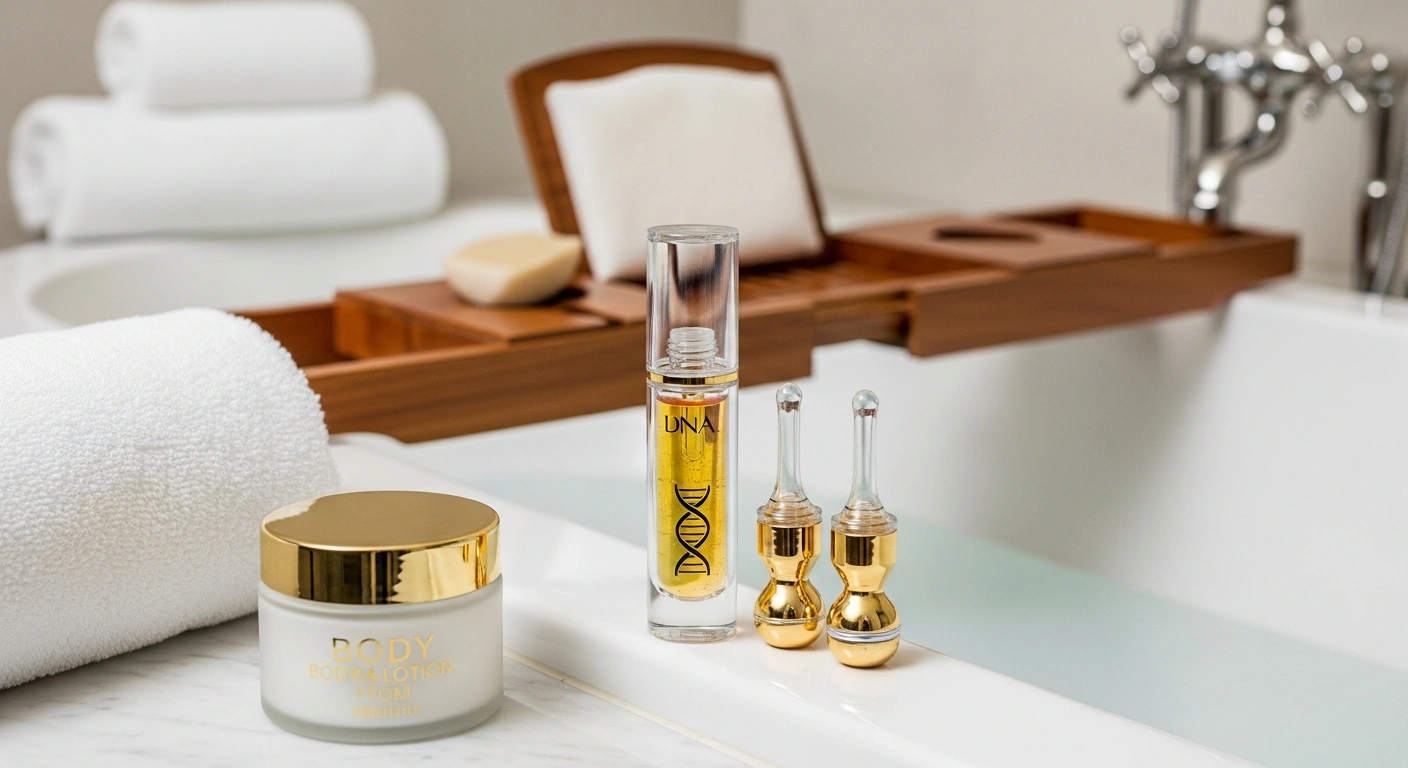
Crepey skin—that thin, wrinkled texture that resembles crepe paper—is one of the most frustrating signs of aging. It shows up on arms, legs, neck, and chest, and basic moisturizers barely make a dent.
The good news: the right body lotion can make a real difference. The key is knowing which ingredients actually work.
Why Regular Lotion Doesn’t Cut It
Most body lotions are just moisturizers—they add hydration to the surface but don’t address the underlying causes of crepey skin:
Collagen loss: Your skin produces less collagen as you age. Basic lotions don’t stimulate collagen production.
Elastin breakdown: The fibers that give skin its “snap back” degrade over time. Moisture alone won’t rebuild them.
Sun damage accumulation: Years of UV exposure breaks down skin structure. Standard lotion can’t repair this damage.
To actually improve crepey skin, you need active ingredients that penetrate deeper and trigger repair processes—similar to what microneedling does for facial skin.
Ingredients That Actually Work
Retinol
Retinol is the gold standard for anti-aging for a reason—it actually stimulates collagen production and speeds cell turnover. A retinol body lotion can do for your body what retinol serum does for your face.
Body skin is less sensitive than facial skin, so it can often tolerate higher retinol concentrations. Start with a moderate strength and increase as your skin adjusts.
Peptides
Peptides signal your skin to produce more collagen and elastin. Look for copper peptides (GHK-Cu), Matrixyl, or other collagen-boosting peptide complexes. The same peptide benefits that work on your face apply to body skin.
Hyaluronic Acid
While hydration alone won’t fix crepey skin, it’s still important. Hyaluronic acid plumps skin cells, making crepey texture less visible while active ingredients do the structural repair work.
Niacinamide
Strengthens the skin barrier, improves elasticity, and enhances the effectiveness of other ingredients. It’s the supporting player that makes everything else work better.
Alpha Hydroxy Acids (AHAs)
Glycolic and lactic acids exfoliate the surface layer, revealing fresher skin beneath and improving the penetration of other active ingredients.
| Ingredient | What It Does | Timeline for Results |
|---|---|---|
| Retinol | Stimulates collagen; speeds cell turnover | 6-12 weeks |
| Peptides | Signals repair and rebuilding | 8-12 weeks |
| Hyaluronic Acid | Hydrates and plumps | Immediate to 2 weeks |
| Niacinamide | Strengthens barrier; improves elasticity | 4-8 weeks |
| AHAs | Exfoliates; improves texture | 2-4 weeks |
Where Crepey Skin Shows Up Most
Upper arms: Often the first area affected. The skin here is thin and often neglected in skincare routines.
Neck and décolletage: Gets significant sun exposure but rarely gets the active ingredients we apply to our faces.
Above the knees: Common in women, especially after weight fluctuations.
Stomach: Particularly after pregnancy or weight loss.
These areas all benefit from the same approach: active ingredients that penetrate and repair, not just surface moisture.
How to Apply for Best Results
Application technique matters more than you might think:
Apply to damp skin. Right after showering, while skin is still slightly damp, ingredients penetrate better.
Use enough product. Body skin covers a lot of surface area. Don’t skimp—you need adequate coverage for ingredients to work.
Massage it in. Don’t just slap it on. Take 30 seconds to massage the product into each area. This improves circulation and absorption.
Be consistent. Daily application is non-negotiable. Crepey skin didn’t develop overnight, and it won’t improve overnight either.
Can You Microneedle Body Skin?
Yes, and it can accelerate results. The same principles from at-home microneedling apply to body skin:
Microneedling creates channels that allow your body lotion’s active ingredients to penetrate deeper. It also triggers collagen production directly.
The needle depth for body skin can be slightly deeper than face (0.5-1.0mm is common for body) because body skin is thicker. Follow the same aftercare protocols.
For areas like upper arms or above the knees, monthly microneedling sessions combined with daily retinol body lotion can produce noticeable improvement within 8-12 weeks.
What Won’t Work
Don’t waste money on:
Basic moisturizers: Vaseline, cocoa butter, and standard body lotions won’t address structural damage.
“Firming” creams without actives: If it doesn’t contain retinol, peptides, or AHAs, “firming” is just marketing.
Quick fixes: Any product promising overnight results is lying. Skin remodeling takes weeks to months.
Recommended Products
Look for body lotions specifically formulated for aging skin. The Glow Body Budder combines retinol with peptides specifically for crepey, aging body skin.
For your neck and décolletage, which are closer to facial skin sensitivity, you might use your facial retinol serum or apply body lotion with lighter pressure.
The Bottom Line
Crepey skin requires more than moisturizer—it needs active ingredients that trigger actual repair. Retinol body lotion, peptides, and consistent application can make a real difference in how your skin looks and feels.
Add monthly microneedling for faster results, and always protect treated areas from sun exposure. Your body skin deserves the same attention you give your face.


