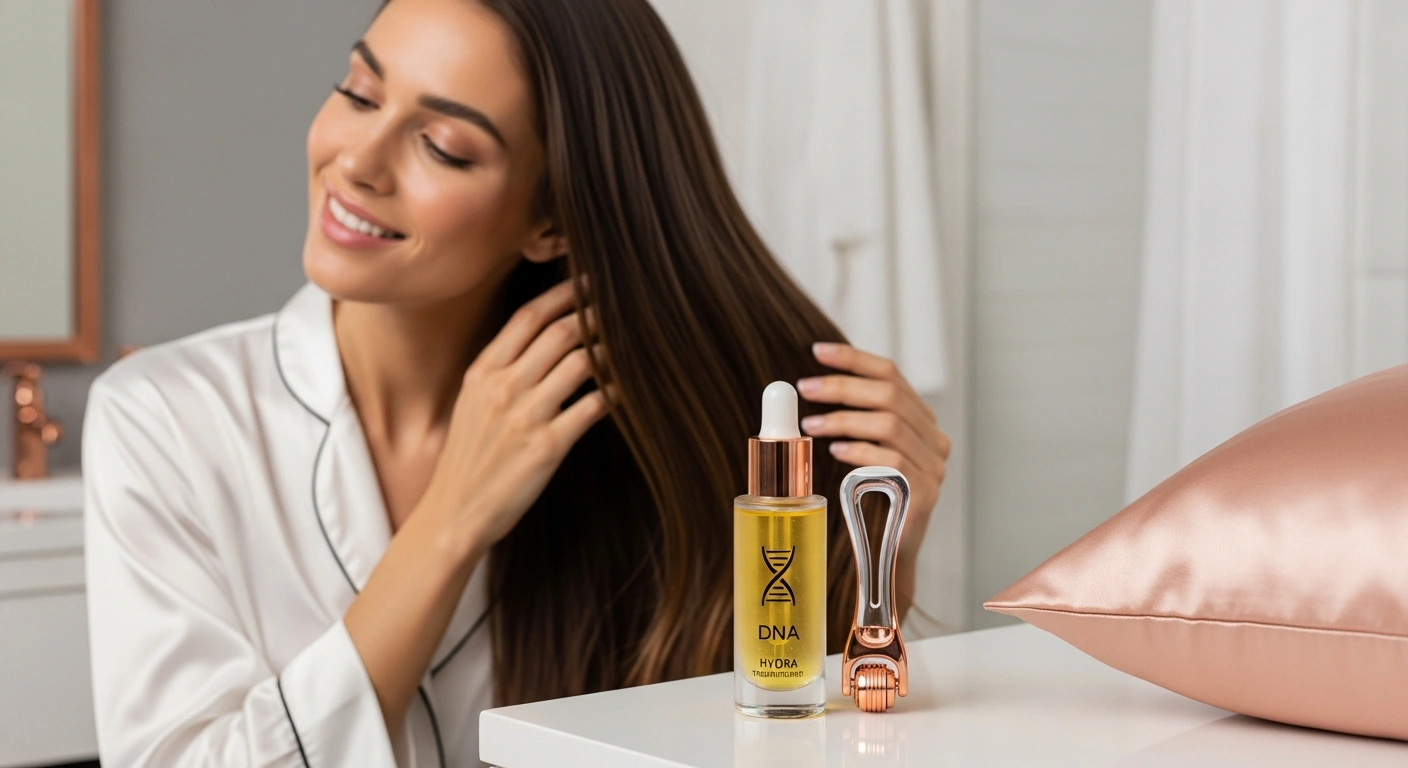
You’ve probably heard of copper peptides for skin—they’re a dermatology darling for wound healing and anti-aging. But copper peptides are now gaining serious attention for something else: hair regrowth.
Let’s look at what the science actually says about GHK-Cu and hair.
What Are Copper Peptides?
Copper peptides (specifically GHK-Cu, or glycyl-L-histidyl-L-lysine copper) are small protein fragments naturally found in human plasma, saliva, and urine. They bind copper ions and deliver them to tissues where they’re needed.
Copper is essential for numerous biological processes, including hair follicle function. As we age, our natural GHK-Cu levels decline significantly—by age 60, levels are about 60% lower than at age 20.
This decline correlates with many signs of aging, including hair thinning.
How Copper Peptides Support Hair Growth
Extending the Growth Phase
Hair follicles cycle through growth (anagen), transition (catagen), and rest (telogen) phases. Thinning hair often results from shortened growth phases—follicles spend less time producing hair and more time resting.
Research shows copper peptides can extend the anagen phase, giving follicles more time to produce longer, thicker strands before entering rest.
Increasing Follicle Size
Miniaturized follicles produce thin, wispy hairs. Copper peptides signal follicles to enlarge, shifting production from vellus (peach fuzz) hairs toward terminal (thick, pigmented) hairs.
Reducing Inflammation
Scalp inflammation contributes to hair loss by damaging follicles and shortening growth cycles. Copper peptides have documented anti-inflammatory effects, creating a healthier environment for hair growth.
Improving Blood Flow
GHK-Cu stimulates angiogenesis (new blood vessel formation). Better blood supply means more oxygen and nutrients reaching hair follicles.
Supporting Hair Proteins
Copper is required for cross-linking keratin and producing melanin. Adequate copper supports the structural proteins that make hair strong and pigmented.
| Mechanism | What It Does | Result |
|---|---|---|
| Anagen extension | Lengthens growth phase | Longer; fuller growth before shedding |
| Follicle enlargement | Increases follicle size | Thicker individual strands |
| Anti-inflammatory | Reduces scalp inflammation | Healthier growth environment |
| Angiogenesis | Increases blood supply | Better nutrient delivery to follicles |
| Protein support | Supports keratin production | Stronger; healthier hair structure |
The Research on Copper Peptides and Hair
Follicle stimulation studies: In vitro research shows GHK-Cu stimulates hair follicle cells and extends the growth phase of cultured follicles.
Wound healing connection: Copper peptides’ proven ability to accelerate wound healing and tissue regeneration applies to follicle recovery and stimulation.
Gene expression: Studies show GHK-Cu influences expression of genes involved in hair growth, including those related to the Wnt pathway (crucial for follicle activation).
Clinical observations: While large-scale hair-specific trials are still emerging, dermatologists have observed hair regrowth benefits in patients using copper peptide products, particularly when combined with microneedling.
Copper Peptides + Microneedling
This combination is particularly powerful for hair regrowth. Scalp microneedling creates channels that allow copper peptides to penetrate deeper, triggers its own growth factor release (amplifying copper peptide effects), and causes controlled injury that copper peptides help heal (synergistic regeneration).
The Glow Hair Kit pairs copper peptide serum with a microneedling device specifically because this combination produces better results than either alone.
How to Use Copper Peptides for Hair Growth
Daily application:
Apply copper peptide serum to scalp in thinning areas. Part hair to ensure product reaches scalp directly. Massage gently for 1-2 minutes to increase absorption and blood flow. Don’t wash out for several hours (overnight is ideal).
Weekly microneedling:
Apply serum before microneedling. Treat thinning areas with 1.0-1.5mm needles. Apply more serum after treatment. Leave overnight without washing.
Timeline:
Expect 3-6 months minimum for visible results. Take monthly photos to track progress.
Choosing a Copper Peptide Hair Product
Not all copper peptide products are equal. Look for:
Meaningful concentration: GHK-Cu should be prominently featured, not a trace ingredient.
Scalp-appropriate formula: Designed for scalp use, not just skin. Should absorb cleanly without heavy residue.
Supporting ingredients: Other follicle-supporting ingredients like caffeine, saw palmetto, or growth factors can enhance results.
Proper packaging: Copper peptides can degrade with light and air exposure. Dark bottles or airless pumps protect potency.
Copper Peptides vs. Other Hair Loss Ingredients
vs. Minoxidil: Different mechanisms—can be used together. Copper peptides may be preferable for those who don’t tolerate minoxidil or want a non-drug option.
vs. Caffeine: Complementary. Caffeine stimulates follicles and may block DHT; copper peptides support overall follicle health. Many formulas include both.
vs. Biotin: Different levels entirely. Biotin is a basic vitamin; copper peptides are active signaling molecules. Copper peptides are more directly effective for stimulating growth.
Who Should Try Copper Peptides for Hair
Good candidates:
General thinning (not just male pattern baldness). Those who haven’t responded to minoxidil. Anyone wanting a multi-mechanism approach. Women with hormonal or age-related thinning. People already using microneedling who want to optimize results.
May need additional treatment:
Advanced baldness. Hair loss from medical conditions (address underlying cause first). Scarring alopecia.
The Bottom Line
Copper peptides aren’t just another hair loss ingredient—they’re backed by solid science showing they support hair growth through multiple biological mechanisms. From extending growth phases to reducing inflammation to improving follicle nutrition, GHK-Cu addresses hair thinning comprehensively.
Combined with scalp microneedling, copper peptides become even more effective, creating a powerful at-home approach to hair regrowth.
Your follicles need copper. It’s time to deliver it.


