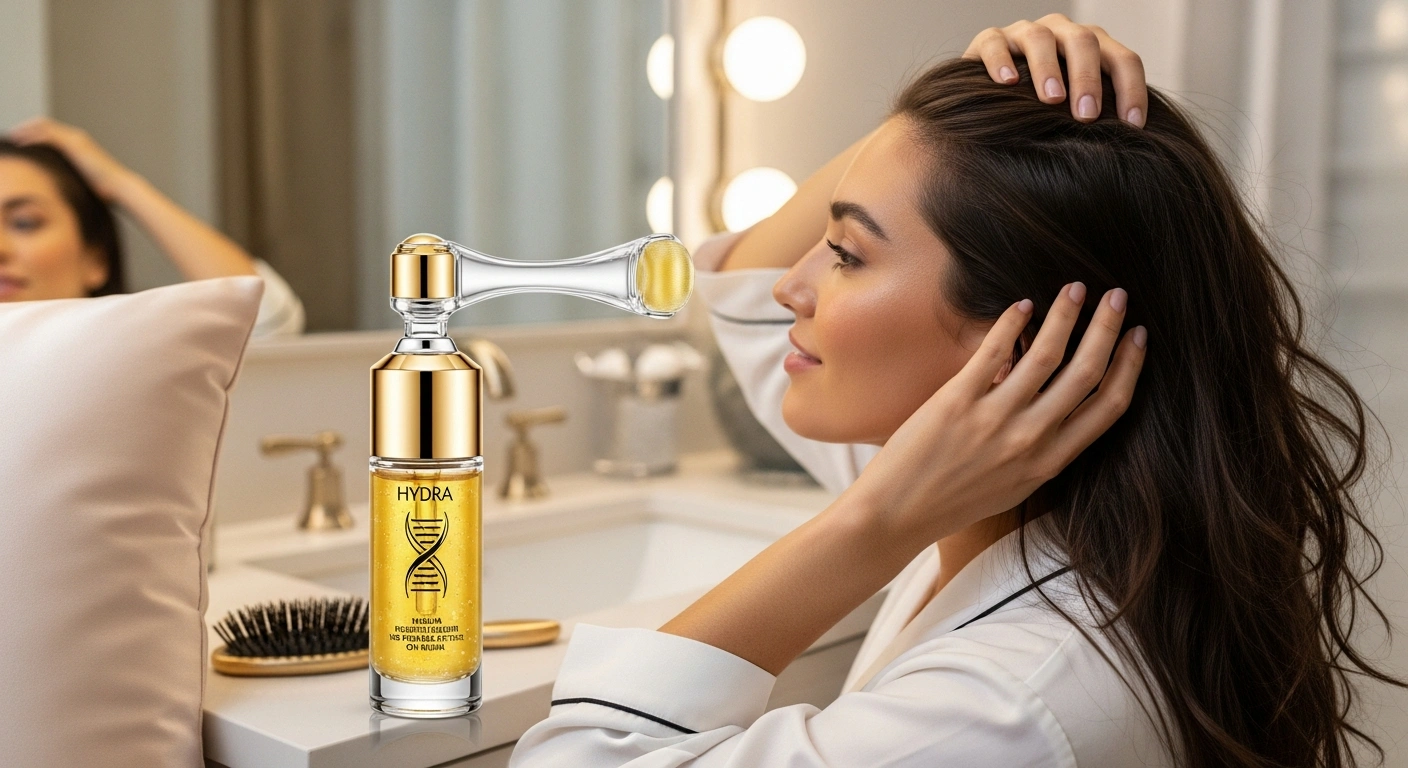
If you’re watching your hair thin and feeling helpless, here’s something that might surprise you: one of the most effective treatments isn’t a pill or an expensive clinic procedure. It’s controlled micro-injuries to your scalp.
Scalp microneedling has become one of the most researched and promising approaches to hair regrowth—and you can do it at home.
How Scalp Microneedling Stimulates Hair Growth
The mechanism is elegant in its simplicity. When you create tiny controlled injuries in the scalp, you trigger your body’s wound-healing response. This response releases growth factors, increases blood flow to hair follicles, activates stem cells in the follicle bulge, stimulates collagen production around follicles, and enhances absorption of topical treatments.
Hair follicles that have become dormant or miniaturized can be “woken up” by this healing cascade. It’s essentially giving your scalp a biological reset signal.
What the Research Actually Shows
This isn’t wishful thinking—there’s solid clinical evidence:
The landmark 2013 study: Participants using microneedling plus minoxidil showed significantly greater hair count increase than minoxidil alone. 82% of the microneedling group reported 50%+ improvement versus 4.5% in the minoxidil-only group.
2018 meta-analysis: Reviewed multiple studies and confirmed microneedling enhances hair regrowth outcomes across different types of hair loss.
Androgenetic alopecia studies: Both male and female pattern hair loss respond to scalp microneedling, with improvements in hair density and thickness.
Combination therapy research: Microneedling combined with topical treatments (minoxidil, growth factors, peptides) consistently outperforms either approach alone.
| Treatment Approach | Hair Count Improvement | Response Rate |
|---|---|---|
| Minoxidil alone | Moderate | ~40% responders |
| Microneedling alone | Good | ~60% responders |
| Microneedling + topicals | Best | ~80%+ responders |
Who Can Benefit from Scalp Microneedling
Good candidates:
Early to moderate thinning (follicles still present but miniaturized). Male pattern baldness in early-mid stages. Female pattern hair loss. Thinning from stress, hormonal changes, or aging. Those who haven’t responded well to minoxidil alone.
May see limited results:
Complete baldness where follicles are gone (nothing to reactivate). Very advanced hair loss. Scarring alopecia (different underlying cause).
The key is that follicles need to still be present, even if dormant or miniaturized. Microneedling can wake them up, but it can’t create new follicles from nothing.
The Right Needle Depth for Scalp
Scalp microneedling requires deeper needles than facial treatment because scalp skin is thicker and follicles are located deeper:
1.0mm: Good starting point. Reaches the upper dermis where some follicle stimulation occurs.
1.5mm: Optimal for most people. Reaches the depth where hair follicle stem cells reside in the bulge region.
0.5mm or less: Too shallow for significant hair growth stimulation. Better for product absorption only.
This is deeper than facial microneedling depths, which is why dedicated scalp treatments are important.
How to Microneedle Your Scalp at Home
What You’ll Need
A microneedling device with 1.0-1.5mm needle depth, a quality hair growth serum with peptides and growth factors, rubbing alcohol for device sanitation, and sectioning clips if you have longer hair.
The Process
Step 1: Prepare your scalp. Wash your hair and let it dry. Part it into sections so you can access the scalp directly.
Step 2: Apply serum. Apply your hair growth serum to the areas you’ll be treating. This allows the active ingredients to be driven deeper during treatment.
Step 3: Microneedle systematically. Working section by section, use gentle rolling or stamping motions across the thinning areas. Move in multiple directions—horizontal, vertical, diagonal—to ensure complete coverage.
Step 4: Apply more serum. After microneedling, apply another layer of serum. Those channels are open and ready to absorb.
Step 5: Leave overnight. Don’t wash your hair until the next day. Let the serum absorb fully.
The Best Serums for Scalp Microneedling
What you apply during treatment matters enormously. Look for:
Copper peptides: Specifically shown to support hair follicle health and extend the growth phase of hair cycles. This is why the Glow Hair Kit features copper peptides as a key active.
Growth factors: Stem cell-derived growth factors that signal follicles to activate.
Caffeine: Stimulates hair follicles and may counteract DHT effects.
Saw palmetto: Natural DHT blocker that can help with androgenetic alopecia.
Biotin and B-vitamins: Supporting nutrients for hair growth.
Avoid anything irritating—no alcohol-based products, strong acids, or fragrances on freshly microneedled scalp.
Treatment Schedule for Hair Regrowth
Frequency: Once per week is optimal. This allows complete healing between sessions while maintaining consistent growth factor stimulation.
Duration: Expect to commit for at least 3-6 months before judging results. Hair growth cycles are slow—what you stimulate today won’t be visible for months.
Maintenance: Once you achieve desired results, you can reduce to every 2 weeks for maintenance.
| Timeline | What's Happening | What You'll See |
|---|---|---|
| Weeks 1-4 | Follicle stimulation beginning | Possible shedding (normal) |
| Months 2-3 | New growth phase activated | Baby hairs appearing |
| Months 4-6 | Growth maturing | Visible thickness improvement |
| Months 6+ | Continued improvement | Fuller coverage; stronger hair |
What to Expect: The Realistic Timeline
Weeks 1-4: You might experience some increased shedding initially. Don’t panic—this is often weak hairs being pushed out as the follicle resets. Your scalp may be slightly pink after sessions.
Months 2-3: Early signs of new growth. You may notice baby hairs or peach fuzz in thinning areas. Existing hair may feel stronger.
Months 4-6: Visible improvement in hair density and coverage. New hairs maturing and thickening. This is when most people notice significant change.
Months 6-12: Continued improvement. Full results typically visible by 12 months of consistent treatment.
Combining with Other Hair Loss Treatments
Microneedling works synergistically with other approaches:
Minoxidil: Apply 4+ hours before or after microneedling (not immediately—it can cause irritation on freshly needled scalp). The combination significantly outperforms either alone.
Hair growth serums: Apply during and after microneedling for enhanced absorption.
DHT blockers: Oral finasteride or topical saw palmetto can address the hormonal component while microneedling stimulates regrowth.
Red light therapy: Some evidence supports LED/laser caps as a complement to microneedling.
Supplements: Biotin, iron (if deficient), vitamin D, and other nutrients support overall hair health.
Safety and Side Effects
Normal after treatment: Scalp pinkness/redness (fades within hours to a day), mild tenderness, temporary tightness sensation.
Contact your doctor if: Infection signs (increasing pain, pus, fever), severe prolonged redness, or unusual reactions.
Don’t microneedle if you have: Active scalp infections, psoriasis or eczema flares in treatment area, open wounds or sores, blood clotting disorders, or you’re on blood thinners.
The Bottom Line
Scalp microneedling is one of the most evidence-backed approaches to hair regrowth available. It’s not magic—it requires consistency and patience—but the research clearly shows it works, especially when combined with quality topical treatments.
The Glow Hair Kit gives you everything needed: the right device plus a copper peptide serum formulated specifically for follicle stimulation.
Your follicles might just be dormant, not dead. It’s time to wake them up.


