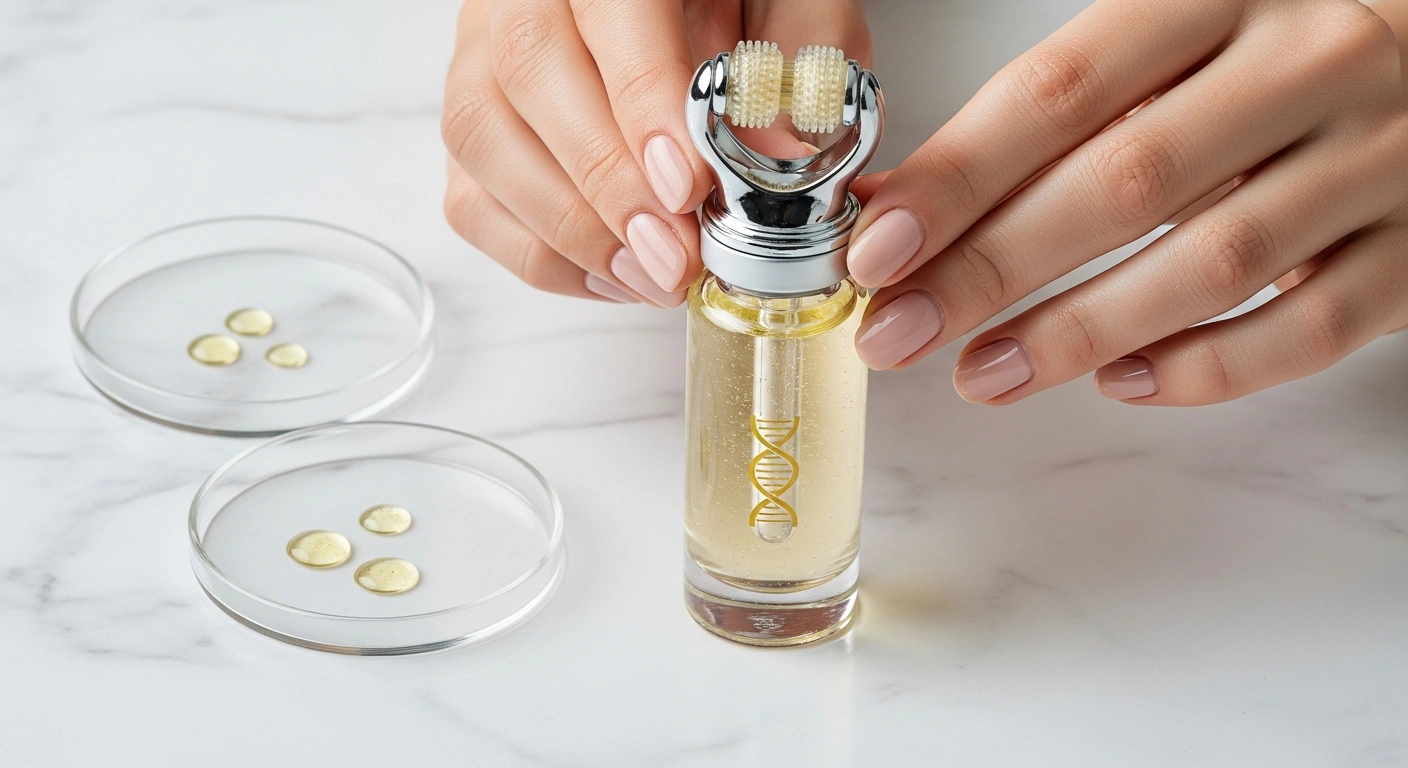
“Peptides” has become a skincare buzzword, slapped on products ranging from drugstore moisturizers to luxury serums. But here’s what most marketing won’t tell you: not all peptides are created equal, and many products contain peptides in concentrations too low to do anything.
Let me explain which peptides actually work, how they work, and how to find products that deliver.
What Are Peptides, Really?
Peptides are short chains of amino acids—the building blocks of proteins. Your skin is full of proteins like collagen, elastin, and keratin that provide structure and function.
When these proteins break down (as happens with aging), your skin releases peptide fragments. These fragments act as signals, telling your skin to produce more collagen and repair damage.
Skincare peptides are designed to mimic these signaling molecules, essentially giving your skin a “fake” message to ramp up repair and production.
The Three Categories of Anti-Aging Peptides
Signal Peptides (Collagen Builders)
These peptides signal fibroblasts to produce more collagen, elastin, and other structural proteins.
Matrixyl (palmitoyl pentapeptide-4): The most researched signal peptide. Studies show it can increase collagen production by up to 117%. Found in many quality anti-aging products.
Matrixyl 3000: A combination of two peptides that work synergistically. Research shows it can reduce wrinkle depth by up to 45%.
Copper peptides (GHK-Cu): Copper-bound peptides that stimulate collagen and elastin while also providing antioxidant benefits. Note: copper peptides are featured in the Glow Hair Kit specifically for follicle support.
Neurotransmitter-Affecting Peptides (Muscle Relaxers)
These peptides interfere with muscle contraction, similar to how Botox works but through topical application.
Argireline (acetyl hexapeptide-8): The gold standard for topical Botox alternatives. Reduces wrinkle depth by up to 30% by limiting muscle movement.
SNAP-8 (acetyl octapeptide-3): An extended version of argireline with potentially enhanced effects.
Leuphasyl (pentapeptide-18): Works on a different part of the muscle contraction pathway, synergistic with argireline.
Carrier Peptides (Delivery Enhancers)
These peptides stabilize and deliver trace elements (like copper) that are essential for skin function.
GHK-Cu: Delivers copper to skin cells where it’s needed for numerous repair processes.
Various manganese and zinc peptides: Deliver other trace minerals important for skin health.
| Peptide Type | What It Does | Best For |
|---|---|---|
| Signal (Matrixyl) | Triggers collagen production | General wrinkles; firmness; overall anti-aging |
| Neurotransmitter (Argireline) | Relaxes muscle contraction | Expression lines; forehead; crow's feet |
| Carrier (Copper peptides) | Delivers essential minerals | Repair; healing; overall skin health |
Which Peptides Should You Use?
The answer depends on your primary concerns:
For expression lines (forehead, crow’s feet, frown lines): Prioritize argireline and related neurotransmitter peptides. The Glow Filler kit is formulated specifically for this.
For general wrinkles and firmness: Look for matrixyl-family peptides that signal collagen production.
For comprehensive anti-aging: Use products that combine multiple peptide types—signal peptides for collagen plus neurotransmitter peptides for expression lines.
How to Choose an Effective Peptide Serum
Not all peptide products are equally effective. Here’s what to look for:
Named peptides, not generic “peptide complex”: Quality products will list specific peptides like argireline, matrixyl, or copper peptides. Vague “peptide complex” language often means low concentrations.
Peptide position in ingredient list: Active ingredients should appear in the first half of the ingredient list. If peptides are near the bottom, there’s probably not enough to do anything.
Multiple peptides: Products combining different peptide types can address multiple aging mechanisms simultaneously.
Supporting ingredients: Hyaluronic acid, niacinamide, and antioxidants complement peptide action.
Appropriate packaging: Airless pumps protect peptides from degradation better than jars or dropper bottles.
Peptides + Microneedling = Better Results
Peptides need to reach skin cells to work. Microneedling creates channels that dramatically increase how deep peptides penetrate.
This combination is particularly powerful for argireline (getting muscle-relaxing peptides deeper into tissue) and for collagen-signaling peptides (reaching the fibroblasts that actually produce collagen).
Weekly microneedling with quality peptide serums can significantly amplify results compared to surface application alone.
Peptides vs. Other Anti-Aging Ingredients
How do peptides stack up against other options?
Peptides vs. Retinol: Different mechanisms—peptides send signals, retinol affects gene expression. Both boost collagen but through different pathways. Combining them addresses aging from multiple angles.
Peptides vs. Vitamin C: Vitamin C is primarily an antioxidant that also supports collagen synthesis. Peptides actively signal for collagen production. Complementary, not competitive.
Peptides vs. Hyaluronic Acid: HA hydrates and plumps; peptides signal and repair. Use both—HA provides immediate effect while peptides work on long-term improvement.
The best anti-aging routines include multiple ingredient types since they work through different mechanisms.
Building a Peptide-Based Routine
Morning: Cleanser → Peptide serum (argireline for expression lines or matrixyl for general anti-aging) → Vitamin C or antioxidant → Moisturizer → SPF
Evening: Cleanser → Peptide serum → Retinol (non-microneedling nights) → Moisturizer
Weekly: Microneedling with peptide serum for enhanced delivery
Timeline for Peptide Results
Weeks 1-2: Improved hydration, subtle smoothing effect
Weeks 3-4: Expression lines begin softening (with argireline), improved skin quality
Months 2-3: Visible reduction in wrinkle depth, firmer skin texture
Months 3+: Cumulative collagen improvement, sustained results with continued use
Peptides require consistent use—effects are cumulative, not immediate.
The Bottom Line
Peptides genuinely work—but only the right peptides at effective concentrations. Signal peptides like matrixyl build collagen over time. Neurotransmitter peptides like argireline relax expression lines.
Look for products that name their peptides specifically, combine multiple peptide types, and deliver them in formulations designed for penetration. Better yet, pair your peptide serums with microneedling to maximize how much reaches your skin cells.
Your skin speaks peptide. It’s time to start the conversation.


